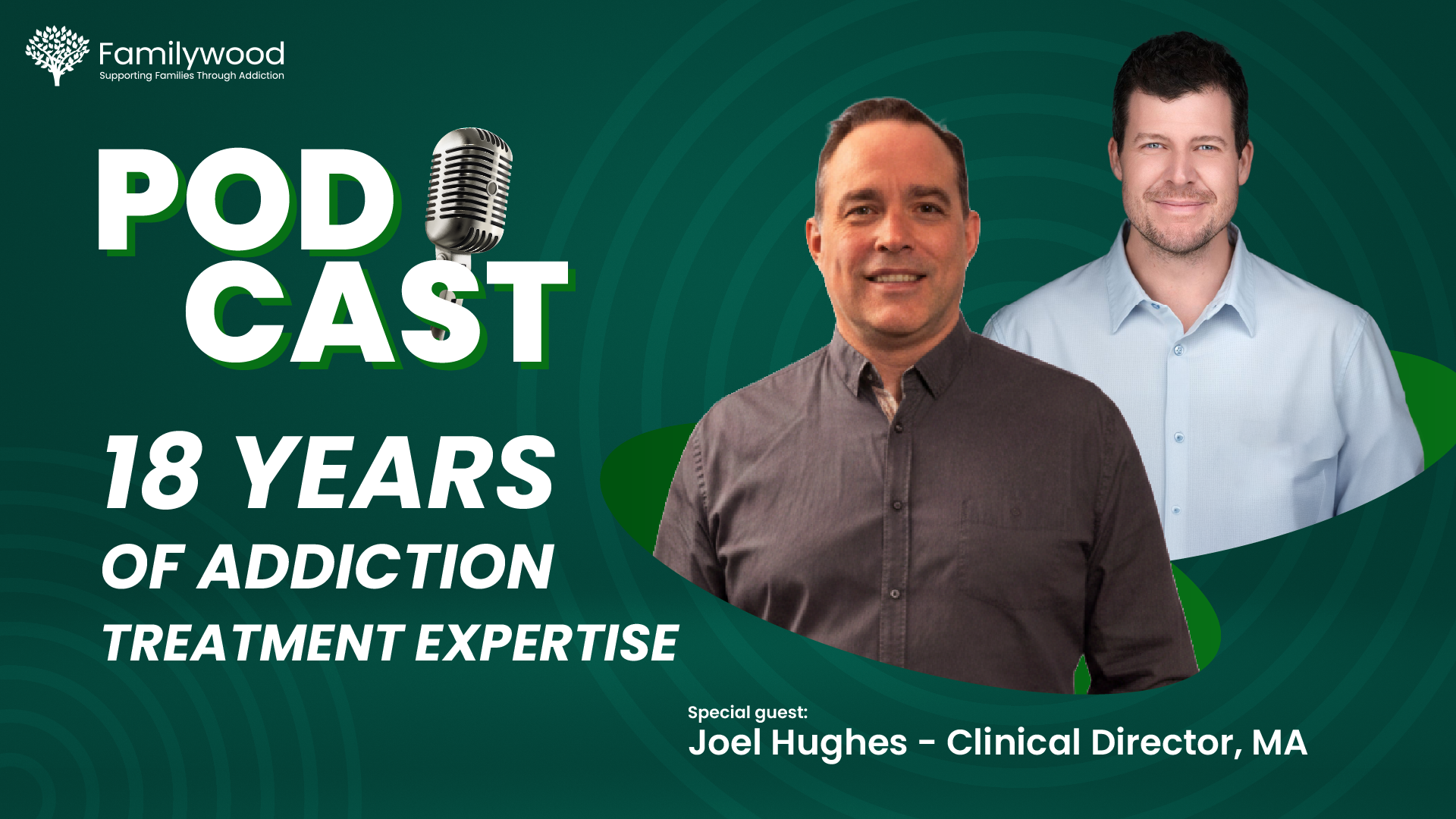
Addiction recovery is not simply about stopping substance use. It is a process that involves stabilization, emotional regulation, rebuilding identity, and learning how to live differently over time. In this episode of the Familywood Podcast, Ross St. George sits down with Joel Hughes to explore what actually drives long-term recovery. Joel brings 18 years of clinical experience at Edgewood Nanaimo, having supported thousands of individuals through treatment and early recovery.
The Reality of Treatment
One of the central themes in this conversation is that residential treatment is often misunderstood. While inpatient programs provide critical stabilization, structure, and early behavioural change, they are not designed to “fix” addiction in a matter of weeks. Joel describes treatment as the beginning of recovery, where foundational skills are introduced but not yet fully integrated. For many individuals, the real test begins after discharge, when they return to environments that can quickly overwhelm early progress.
Why Extended Addiction Treatment Matters
Joel explains that the “extended care” model at Edgewood Nanaimo was developed in direct response to alumni feedback. Many individuals found that while treatment helped initiate change, it was not always enough time to fully solidify new behaviours and ways of thinking. Extended care offers a protected environment where individuals can begin to practise life skills, establish routines, and gradually transition into real-world responsibilities.
For some, this period represents the first time they have experienced stable, structured living without substances. Joel highlights that not everyone entering treatment is returning to a previously healthy baseline; in some cases, individuals are learning foundational life skills for the first time. This distinction between “rehab” and “hab” becomes critical, especially for younger clients or those with more severe and longstanding patterns of use.
Understanding Emotional Intensity in Addiction
A key insight from Joel’s clinical experience is the role of emotional sensitivity in addiction. Many individuals who struggle with substance use also experience heightened emotional reactivity, stronger internal responses, and lower distress tolerance. While this sensitivity can contribute to suffering, it can also become a source of empathy, intuition, and creativity when properly supported.
Recovery, therefore, is not just about removing substances but about learning how to regulate emotions, interpret internal experiences more accurately, and respond differently under stress. Joel emphasizes the importance of skills such as pausing, checking the evidence, and engaging a more balanced and grounded mindset. These skills require repetition and practice, particularly in environments where mistakes do not carry catastrophic consequences.
Why Logic Alone Does Not Work
Families often approach addiction with the tools that have served them well in other areas of life. They apply logic, offer solutions, and attempt to fix the problem through effort, resources, and persistence. However, addiction frequently does not respond to these approaches, which can leave even highly capable individuals feeling frustrated and ineffective.
Joel and Ross explore how this dynamic can lead to burnout within families, as increased effort does not produce the expected results. Without an understanding of how addiction affects the brain, families may interpret this as resistance, defiance, or lack of motivation. In reality, it often reflects the limitations of logic when someone is overwhelmed by craving, distress, or deeply ingrained patterns of coping.
The Limits of Environment
The conversation also explores the idea that improving someone’s environment, relationships, and opportunities is essential but not always sufficient. While connection, safety, and stimulation are critical components of recovery, there remains a subset of individuals who continue to struggle despite these improvements.
This reflects a more complex reality, where addiction is influenced not only by environment but also by emotional regulation, coping capacity, and individual vulnerability. For these individuals, recovery requires deeper, more sustained work that extends beyond simply changing external circumstances.
What Actually Predicts Recovery: Insights from John F. Kelly
Research highlighted from Kelly and colleagues in this episode points to the importance of a recovery-supportive social network as one of the strongest predictors of long-term sobriety. This means being surrounded by people who understand addiction, can offer support without judgment, and help ground someone when their thinking starts to go sideways. Joel emphasizes that recovery also requires motivation, purpose, and a willingness to stay engaged even when things feel difficult. These elements are not built quickly and often require consistent practice within a structured and supportive environment.
The Rat Park Study Revisited: Connection Helps, But It’s Not Enough
The Rat Park study demonstrated that when environments improve, substance use often decreases, which reinforces the importance of connection, stimulation, and safety. However, as Joel points out, not every subject stopped using, even in an ideal environment, which mirrors what we see clinically. There is a subset of individuals who continue to struggle despite having access to support, opportunity, and healthier surroundings. For these individuals, recovery requires more than environmental change, including deeper work around emotional regulation, coping skills, and understanding how their brain responds to stress and distress.
Support for Families
At Familywood, we work with the people who are often carrying the emotional weight of addiction: spouses, parents, and family members. This work focuses on helping families regulate their own responses, establish clear and sustainable boundaries, and engage in ways that support both their wellbeing and their loved one’s recovery.
If you are navigating addiction in your family, support is available. You do not have to carry this alone.