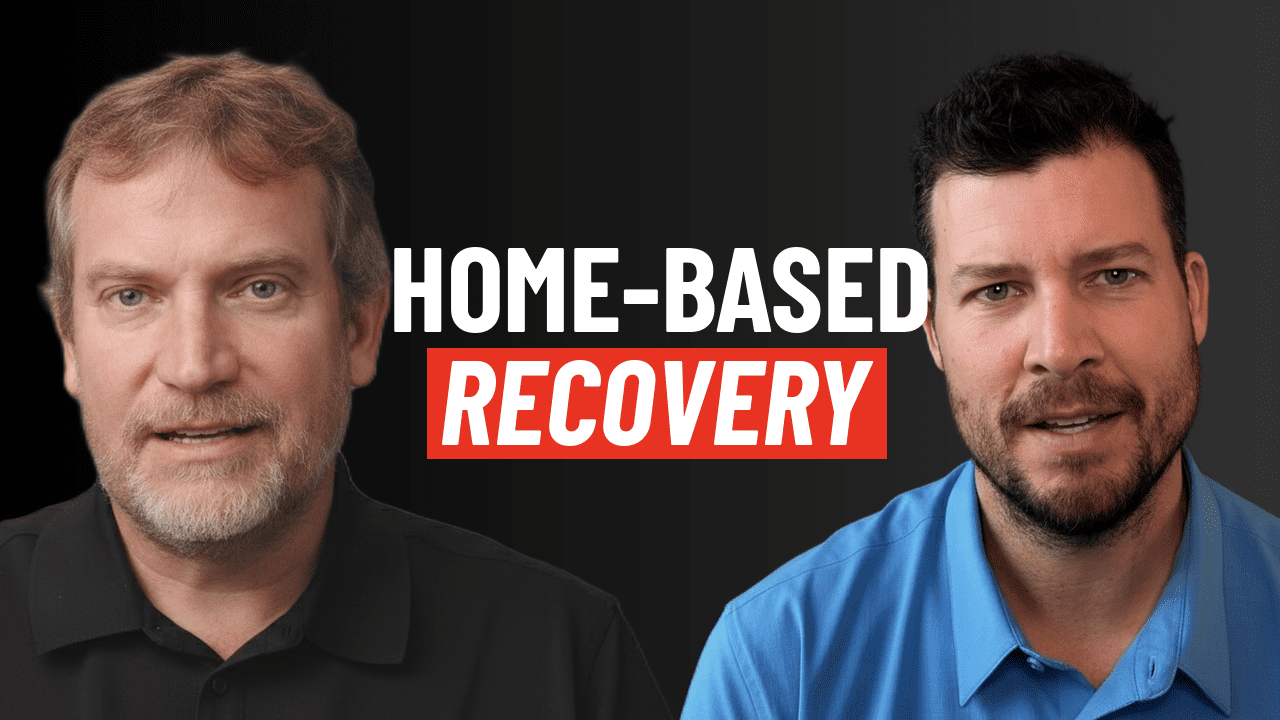
In this episode of the Familywood Podcast, Ross St. George speaks with Rob DeClark, a veteran in the addiction-treatment field with over 25 years of experience. From his early days at government-funded treatment centres to helping launch Cedars at Cobble Hill and later Homewood Ravensview, Rob has played a key role in shaping addiction care in Canada. Today, he’s part of the leadership team at Home Based Recovery (HBR), a new model designed to make treatment more accessible, flexible, and family-integrated.
From Inpatient Leadership to At-Home Recovery Innovation
After years in residential settings, Rob noticed a recurring pattern: many people who needed help could not access it. Cost, childcare, work obligations, and the logistics of leaving home for weeks or months often made inpatient treatment unrealistic.
Home Based Recovery was designed to bridge that gap. It offers a 30-day virtual intensive program that includes guided modules, journaling, exercise, lectures, and daily or near-daily sessions with a therapist or recovery coach. As Rob explains, “It’s about structure, accountability, and accessibility – helping people build healthy routines without uprooting their lives.”
This approach fills a large gap between weekly outpatient counselling and full residential treatment, offering a level of intensity that suits “functioning” individuals who are struggling but still maintaining family and work responsibilities.
Accessibility: More Than Just a Price Point
Rob points out that financial barriers are only part of the challenge. Many clients, especially single parents, simply cannot leave home for weeks. “We work with clients who have motivation and a safe place to recover,” he says. “Sometimes that means a mother of four who needs flexibility, not a flight to another province.”
According to one of HBR’s posts, 66 percent of mothers face barriers to accessing treatment, often related to childcare and employment responsibilities. Home Based Recovery’s virtual structure allows these individuals to participate from home—something that has become increasingly viable since the pandemic normalized telehealth.
This evolution aligns with growing evidence that digital and hybrid models of care can be as effective as in-person treatment for many individuals.
Families Are the System: Why Engagement Matters
Family involvement is a cornerstone of sustainable recovery. At Home Based Recovery, this philosophy takes shape through a 17-module family program that includes six counselling sessions. Rob notes that families are not bystanders in the process – they are active participants.
Because clients remain at home during treatment, family dynamics surface in real time. “When clients are in treatment at home, everyone is living the recovery,” Rob explains. “The family is adjusting alongside them, which can be both challenging and healing.”
He adds that parallel work with families – such as what Familywood provides – is critical. It helps address issues like mistrust, boundary confusion, and emotional regulation. As Rob puts it, “If the system doesn’t change, the recovery rarely sticks.”
Internal references:
Accountability Without Punishment
One of the most innovative aspects of HBR’s model is its trust-but-verify approach. Clients use remote monitoring tools like SoberLink or LifeLabs testing to confirm sobriety. This process removes the policing role from family members, reducing conflict and resentment.
“Families shouldn’t be the monitor,” Rob says. “We handle the verification so that loved ones can focus on rebuilding trust rather than enforcing it.”
This structured accountability, combined with intensive support, appears to correlate with completion rates of 60–70 percent – a strong outcome in the treatment field. Yet Rob is quick to emphasize that long-term success requires better data collection. “We’re committed to improving how we measure outcomes,” he notes, reflecting a larger industry challenge around standardized recovery metrics.
A Shared Mission: Building Collaboration, Not Competition
As the conversation closes, both Rob and Ross highlight the need for collaboration over competition in the addiction-care field. Treatment centres, counsellors, and aftercare providers can do far more together than apart. Familywood’s partnership with Home Based Recovery reflects that shared vision: helping families and individuals heal side by side.
“When families engage in recovery, outcomes improve significantly. The data supports it, but more importantly, we see it every day.”
– Ross St. George, Familywood Founder
For families who feel isolated, hopeful, or uncertain about how to help, resources like Familywood and Home Based Recovery are changing what’s possible. Healing doesn’t always have to mean leaving home – it can start right where you are.
Home Based Recovery is a virtual addiction-treatment program that combines structure, accountability, and professional support in an online format. It allows individuals to engage in daily therapy, journaling, and recovery exercises from home while maintaining work or family responsibilities.
This model is best suited for individuals who are motivated, medically stable, and have a safe living environment. It serves people who may not need inpatient treatment but require more structure than traditional once-a-week counselling sessions.
Families are invited to take part through a structured 17-module program that includes counselling, education, and communication coaching. This helps families build healthier boundaries and understand how to support their loved one’s recovery without enabling unhealthy patterns.
Research shows that digital and hybrid models can be just as effective as traditional treatment for many people. When programs are structured, evidence-based, and supported by trained clinicians, clients often report equal or greater satisfaction and engagement.
Familywood provides parallel counselling and psychoeducation for spouses, parents, and adult children of individuals in recovery. By addressing the family system, both the client and their loved ones gain the tools needed to build sustainable recovery and stronger relationships.