Introduction
When addiction or eating disorders enter a family system, everyone feels it. Boundaries blur, emotions run high, and members often fall into rigid patterns just to survive. Elizabeth Loudon, Chief Operating Officer of Ross Solutions Group (RSG), has spent over two decades helping families heal from addiction and related disorders.
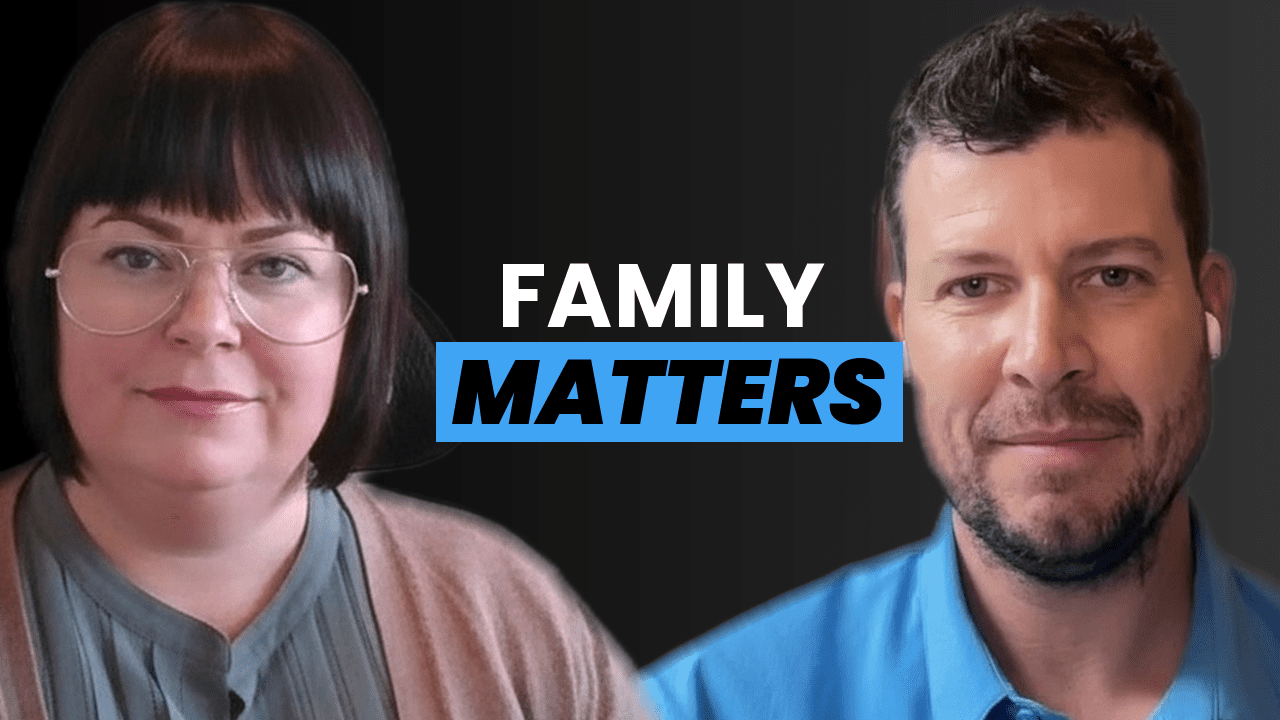
In this week’s Familywood Podcast, Elizabeth joined host Ross St. George to discuss what truly changes the trajectory of recovery, not just for individuals but for entire family systems. From her leadership at The Healing Institute, Recovery Coach Academy of Canada, and Lakeview Recovery Community, to her early days at Edgewood’s Insight family program, Elizabeth’s work has continually centered on one theme: recovery happens in relationship.
From Numbers to Nurture: A Journey Into Addiction Work
Elizabeth began her career with plans to study statistical analysis, not counselling. But a summer job at Edgewood introduced her to a world where emotions, not numbers, held the key to healing. After completing Edgewood’s Insight program—a five-day deep-dive into family systems—she realized the profound impact of emotional honesty.
“I thought they were going to fire me for crying,” she said. “Instead, they told me that vulnerability was my strength.”
Mentored by clinicians such as Jane Ferguson and Mary Ann Myers, Elizabeth became known for her quiet wisdom and calm leadership. These qualities now define how she trains and mentors the next generation of therapists and recovery professionals.
Family Systems as the Core of Recovery
Elizabeth’s philosophy aligns closely with what many clinicians at Familywood observe in practice. Recovery cannot be sustained in isolation. She describes countless families who unknowingly enable addiction through silence, rigidity, or overprotection.
“We can get the person well,” she explained, “but if you send them back into a family system that isn’t healthy, their chances of staying well go down.”
Her approach centers on helping families move from chaos to containment. That includes integrating family education into every new RSG program, whether in a therapeutic community, a correctional initiative, or a publicly funded recovery centre in Alberta.
Why It Matters Clinically
Empirical evidence supports this approach. Families affected by addiction often show elevated rates of depression, anxiety, and trauma-related symptoms. When the family system heals, relapse rates drop and overall resilience improves.
Insight and Integration: Healing the Family’s Emotional Architecture
Both Ross and Elizabeth trace their roots to Edgewood’s Insight program, which explores the complex interplay between attachment, boundaries, and intergenerational trauma. Elizabeth recalls a moment when a father in recovery reunited with his three-year-old daughter at visiting day:
“He dropped to one knee and she ran into his arms. That’s when I knew why I do this work.”
Moments like these illustrate what the literature refers to as relational containment. This is the process where families create emotional safety and rebuild trust through empathy and communication. Without this containment, recovery often feels unstable or incomplete.
Research Spotlight: Family Change and Eating Disorder Recovery
The conversation turned to a 2024 meta-synthesis published by University College London on family therapies for anorexia nervosa.
The study reviewed 14 qualitative papers and found that healing depends less on the treatment manual and more on the connection between therapist, client, and family.
Families described better outcomes when therapy felt flexible, emotionally attuned, and collaborative. Conversely, outcomes worsened when therapy focused narrowly on food, weight, or compliance.
This aligns closely with Elizabeth’s clinical perspective:
“It’s never just about food or substances. It’s about teaching families emotional regulation and safe communication.”
The researchers concluded that recovery is sustained when therapy fosters secure and trusting relationships where all members feel heard and valued. This mirrors the Familywood model. When the relational pattern changes, the prognosis changes too.
Building the Future of Accessible Care in Alberta
Elizabeth now leads operations for RSG’s treatment initiatives in Alberta, many of which are publicly funded through provincial partnerships. These programs, including Lakeview Recovery Community, offer year-long treatment at no cost to participants.
“People don’t have to throw down a MasterCard anymore,” she said. “They can get the same quality of care, free of charge.”
Her goal is to replicate the excellence of private care in public systems, expanding access for families who have long been excluded by financial barriers. The initiative represents a powerful collaboration between government funding, clinical innovation, and community-based healing.
Treatment Options and Family Support
Familywood works closely with treatment providers across Canada to bridge inpatient care with ongoing family therapy. If your loved one is currently in addiction treatment at The Healing Institute or another centre, Familywood’s counselling services can help your family maintain stability and prevent relapse.
Related Familywood Resources
Healing the Family System in Addiction Recovery – Dr. Melanie Person
Why Families Need Support in Addiction Recovery – Rochelle Davidson
Families Affected by Gambling Disorder – Dr. Martin Zack, CAMH
Conclusion
Elizabeth Loudon’s work represents the meeting point of clinical expertise, systems thinking, and deep compassion. Her career demonstrates what research continues to confirm: healing begins when connection replaces control.
Because addiction impacts every member of the family. When the system heals through communication, boundaries, and empathy, the individual’s recovery becomes more sustainable.
Yes. Research shows that systemic family therapy improves both psychological and relational outcomes in disorders such as anorexia nervosa
It is the process of helping family members regulate emotion and restore safety. When families can hold one another emotionally, recovery becomes more stable and less reactive.
We provide virtual therapy for spouses, parents, and adult children. Our sessions help families rebuild trust, manage triggers, and create new relationship patterns after residential treatment.
You can still begin your own healing. Family therapy is effective even when the person struggling is not yet ready to engage.